![NBM Logo White 1200px 72dpi [RGB]](png/nbm_logo_white_1200px_72dpi_rgb.png "NBM Logo White 1200px 72dpi [RGB]")
Adopt an Artifact: Pension Building Hand Fan
October 29, 2025

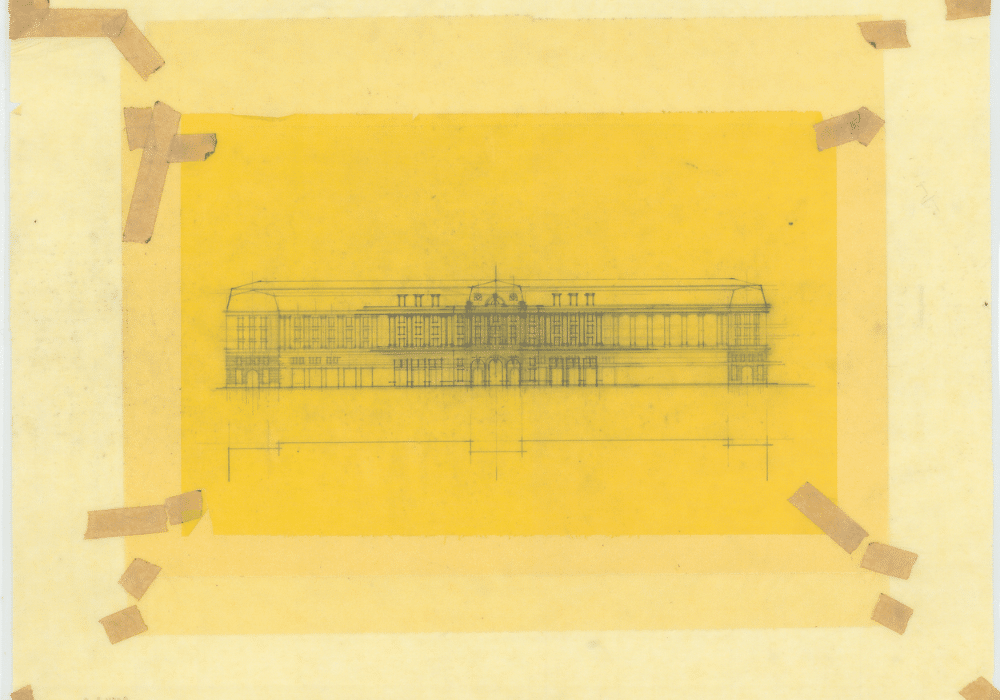
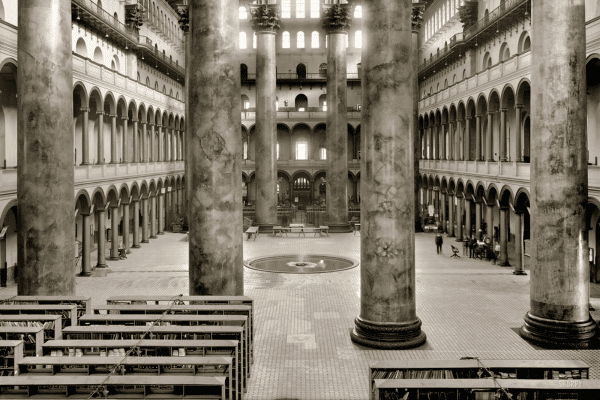
Today, visitors to the National Building Museum admire the Pension Building’s grand arches and light-filled halls. But when the building first opened in 1887, it fulfilled a unique and urgent mission. Although the United States had been administering pensions since at least 1792, the number of veterans receiving federal benefits grew dramatically after the Civil War. By 1881, the demand had increased so significantly that Congress commissioned Montgomery C. Meigs (1816-1892), the Union Army’s former quartermaster general, to design and construct a dedicated building for the Pension Bureau. When the new headquarters opened, pensions accounted for nearly one-third of the federal budget, and the building housed more than 1,500 clerks and officers.
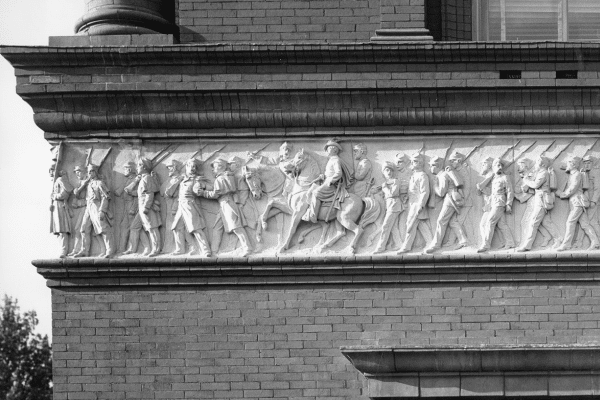
Meigs’s design for the Pension Bureau was conceived as both a functional office building and a monument to those who died fighting in the Civil War. He commissioned the Austro-Bohemian sculptor Caspar Buberl (1834-1899) for the structure’s centerpiece, a 1,200-foot terra cotta frieze depicting the Union Army and Navy.
The light, airy interior and ornamented brick façade of the Bureau office contrast sharply with the Greco-Roman aesthetics that dominate Washington, D.C.’s nineteenth-century government offices. Having already proven his more traditional craftsmanship through work on the Capitol Dome, Meigs opted for a more individual aesthetic at the Pension Bureau, inspired by Antonio Sangallo’s Palazzo Farnese in Rome. This departure from the norms of civic architecture was controversial at the time, and upon completion, the Pension Bureau building was dismissed as “Meigs’s old red barn.”

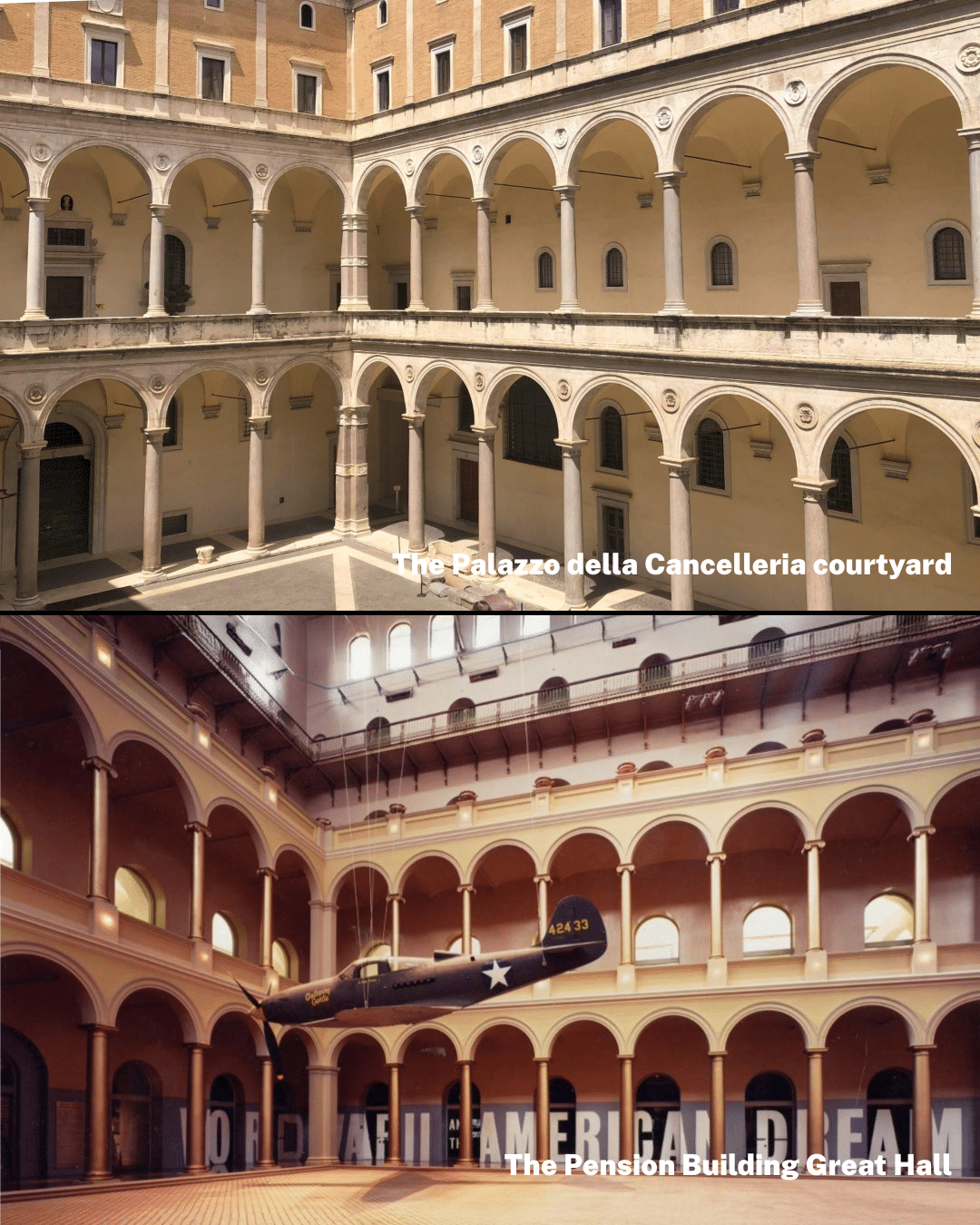
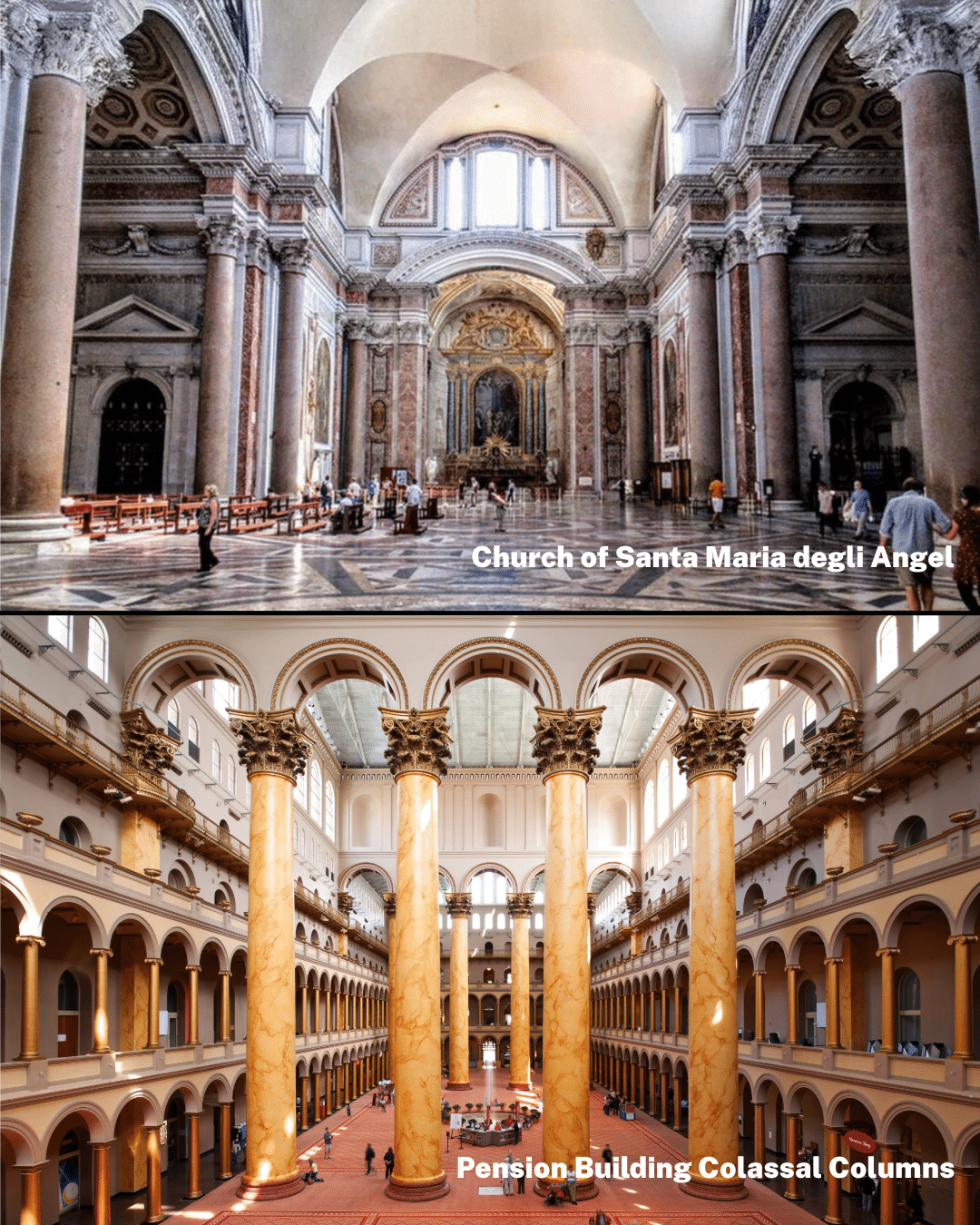
When the Pension Bureau was absorbed into the US Veterans Administration in 1930, the US General Accounting Office (GAO) took over the building. From 1930 to 1950, the new administration considered remodeling Meigs’s design or even demolishing it altogether, but public perception had changed, and its historic value had come to be appreciated. The building’s spacious Great Hall had been the host of inaugural balls for presidents including Grover Cleveland and Theodore Roosevelt, and its air ventilation system was recognized as an impressive feat of early industrial engineering.
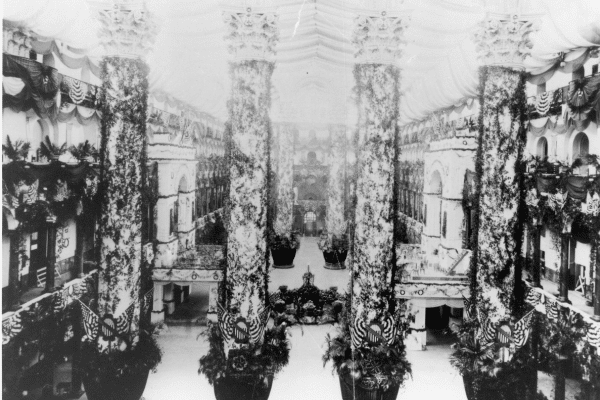
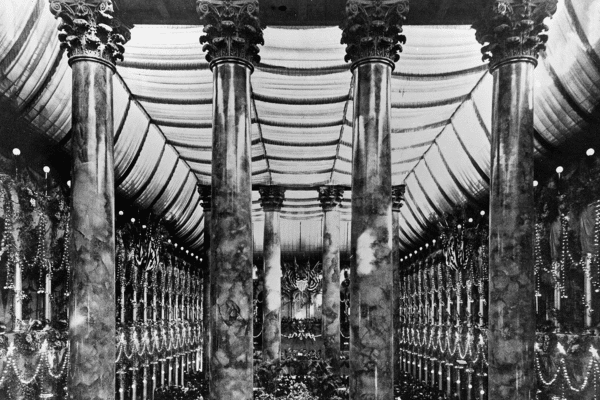
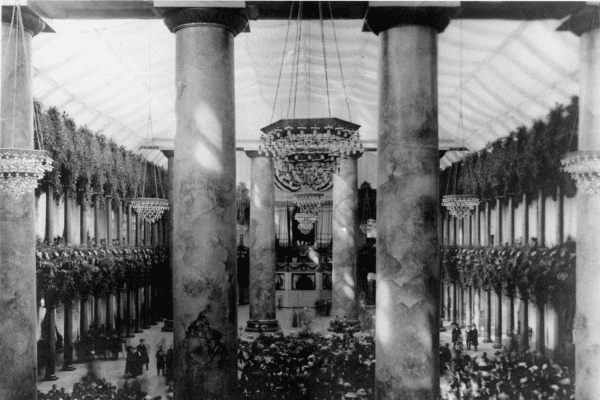
In 1967, the Pension Building was added to the National Register of Historic Places based on a report by Chloethiel Woodard Smith, the sixth woman inaugurated to the American Institute of Architects (AIA) College of Fellows and the owner of the largest female-run architectural firm in the United States during the 1970s. In this report, Smith suggested that the building could function as the home of a future museum of the building arts. A decade later, a 1980 Act of Congress designated it as the site of the National Building Museum.
Help us preserve this history!
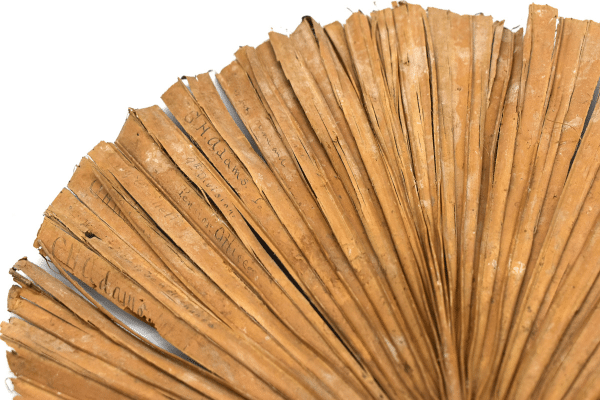
This fan is part of the Pension Building Collection, a group of artifacts uncovered during recent renovations by the General Services Administration and later transferred to the National Building Museum’s archive. The collection offers a glimpse into the everyday lives of the many employees who worked in the building over the years. The fan itself is presumed to date from the original construction in the 1880s, and while this artifact is remarkably well-preserved, dirt and dust from the last century conceal much of the beautiful handwriting on its face.
Click here to Adopt an Artifact and help protect this legacy.
The National Building Museum is home to the nation’s foremost archive of American architectural and design heritage. The Adopt an Artifact program allows you to directly support the proper care and preservation of objects with critical conservation needs, helping the Museum continue its mission to inspire curiosity about the world we design and build. To support this initiative, click here.