![NBM Logo White 1200px 72dpi [RGB]](png/nbm_logo_white_1200px_72dpi_rgb.png "NBM Logo White 1200px 72dpi [RGB]")
Everyday Preservation Activities in Collections Storage
October 1, 2025
The Collections Department at the National Building Museum preserves our artifacts so they can be researched, exhibited, and appreciated for generations to come. Most of our preservation work involves storing materials safely. The entire collection is housed in secure, alarmed, climate-controlled rooms. Individual objects are placed in acid-free folders, boxes, and cabinets, protected from light and dust. We minimize how often items are moved or handled. When we need to handle drawings, photographs, or artifacts, we wear gloves to protect them from the oils on our hands.
However, some objects require more than safe storage. When we come across “problem” artifacts, we take simple but effective steps to prevent deterioration and improve accessibility. Here are four preservation challenges we’ve encountered and how we addressed them.
Removing Staples, Paperclips, and Other Fasteners from Paper Materials
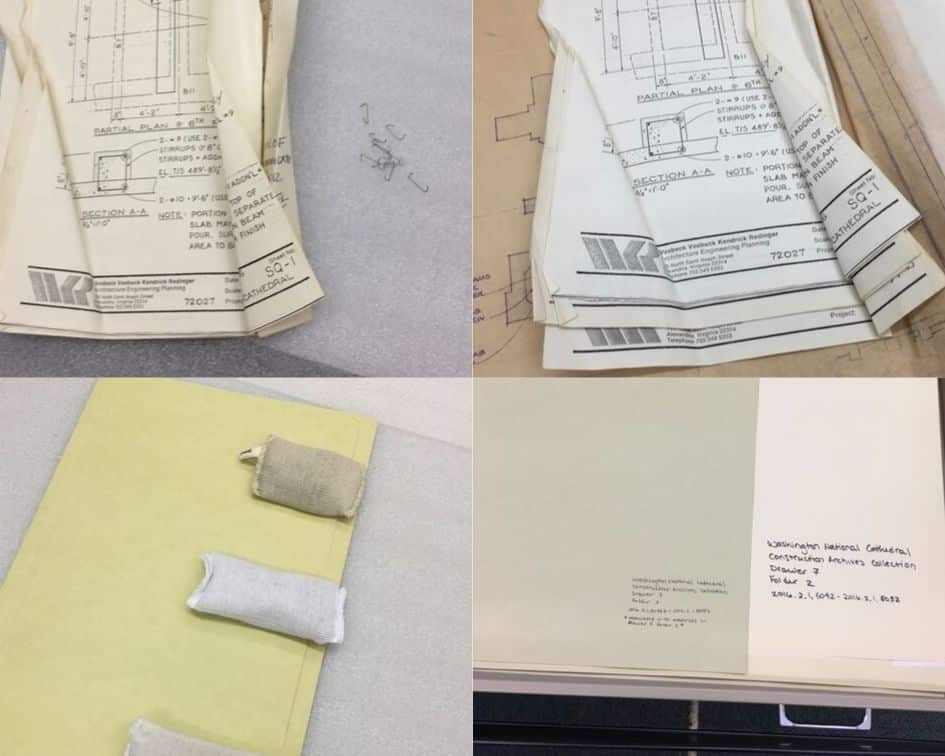
From the Washington National Cathedral Construction Archives Collection, a set of documents was stapled to a 1970s Southwest Tower Floor Framing Plan. These documents add important details and context to the drawing, but the staples caused damage.
The staples had oxidized, staining the paper. They also caused tears whenever the drawing was handled and scraped other documents stored nearby. We carefully removed the staples to avoid further damage. The heavily creased documents were then smoothed and weighted down for a week to flatten them. Once reasonably flat, they were scanned and added to the digital file associated with the drawing. The originals were placed in a separate folder but stored in the same drawer for easy access in the future.
Cleaning Decorative Plaster
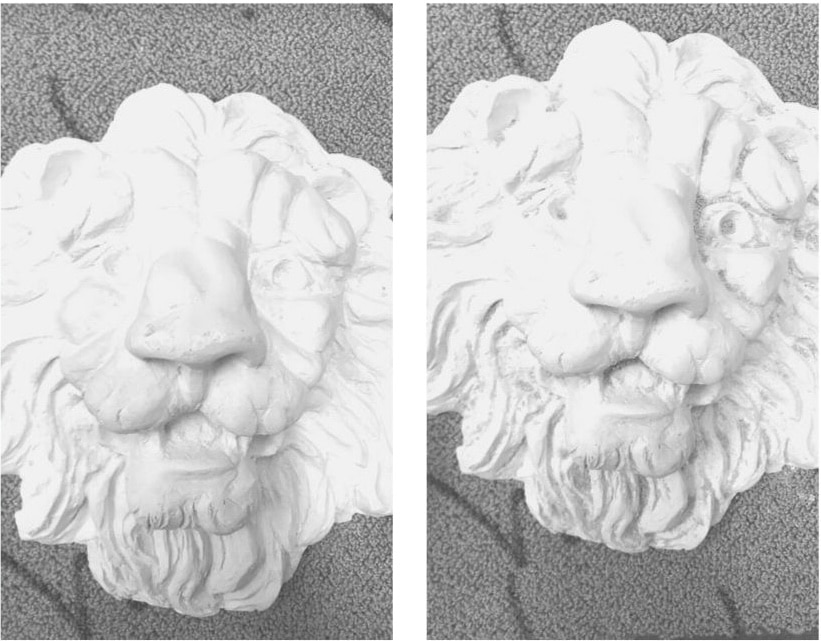
A lion head sculpture from the Giannetti Studios Decorative Plaster Collection arrived covered in dust and debris. This piece, along with sixteen other decorative plaster elements, came directly from the studio where it was made and stored for decades. The dust discolored the plaster and obscured its carved details. It also spread through our storage room, so cleaning was necessary.
Plaster is soft and easily scratched, so we proceeded with care. We loosened the dust using a soft, clean paintbrush, avoiding contact with the metal ferrule to prevent scratching. Then we used a small, low-suction vacuum designed for artifacts to gently remove the debris. Heavily soiled areas required a second round of brushing and vacuuming. Altogether, we cleaned all 17 pieces in one afternoon. Twelve, including the lion, are now on display in our Visitor Center, safely sealed in cases to prevent future dust buildup.
Removing Tracing Paper Drawings Taped to Fiberboard
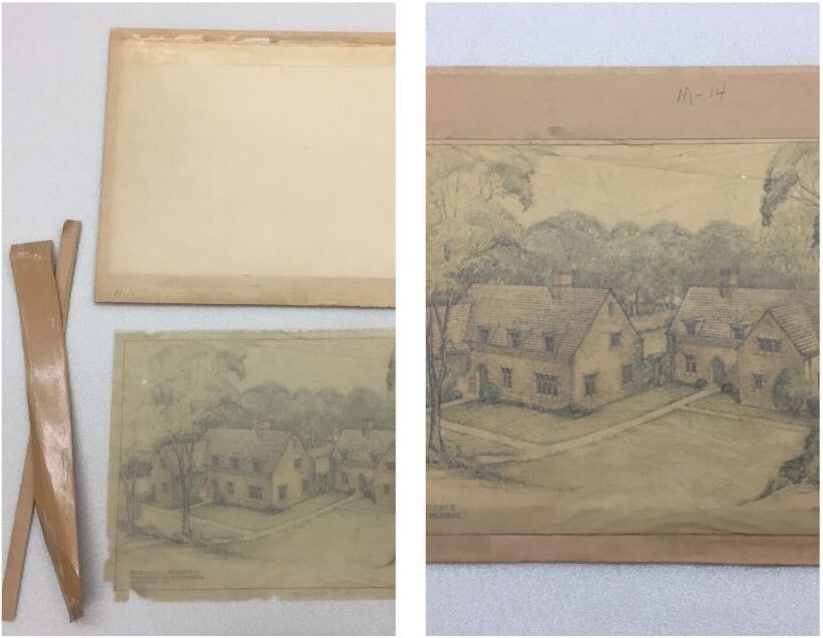
This original 1939 color pencil rendering of the planned Canon’s Residence, also from the Washington National Cathedral Construction Archives Collection, had been taped to high-acid fiberboard. Many similar drawings in the collection are heavily glued to acidic backing materials, which makes safe removal impossible. Fortunately, this one had been attached using only small amounts of tape at the edges.
After 80 years, the tape had dried out significantly. With patience and a very thin bone folder, we carefully removed it without harming the drawing. The fiberboard and tape held no information and were discarded. The drawing was scanned and placed in a new archival folder for safe storage.
Cleaning and Conserving a Metal Elevator Surround
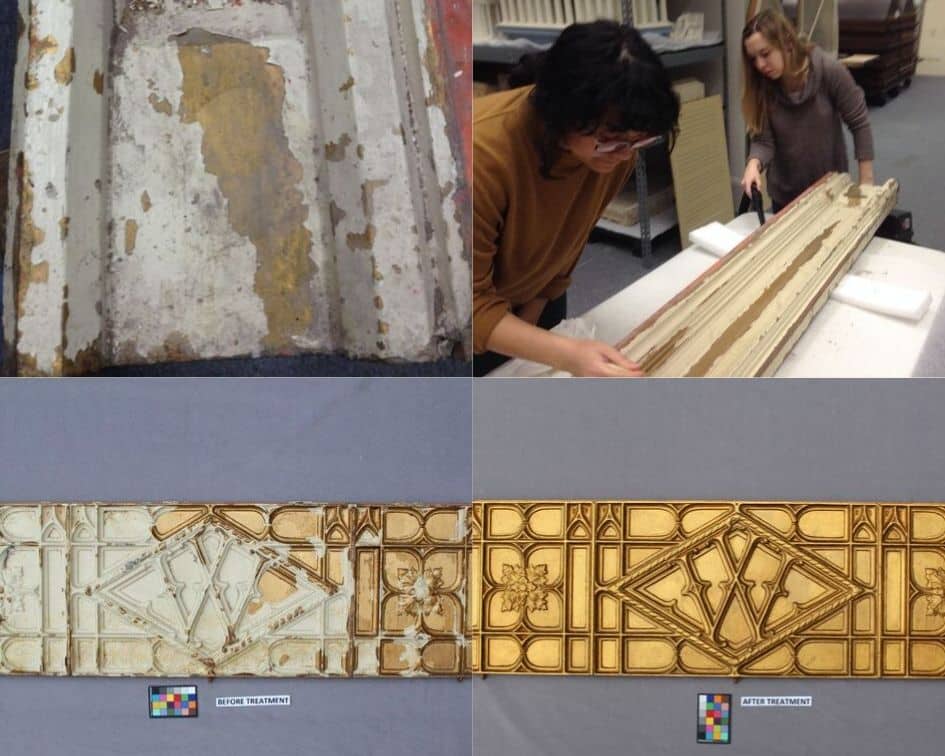
From the Woolworth Collection, this elevator surround was removed from New York’s Woolworth Building during a recent renovation and donated to the Museum in 2018. Composed of five parts, the surround had been painted and repainted for over a century, then exposed to dust and debris in a construction zone before arriving at the Museum.
We began by removing loose dust using the same careful brushing and vacuuming method used for the plaster pieces. But restoring the piece fully required professional conservation. In preparation for display in our Visitor Center, conservator Catharine Valentour cleaned the surface, removed excess layers of paint, retouched worn areas, and applied a protective gold gilt wax. We’re thrilled to see this piece of American architectural history restored, and excited for the public to see it too.
Originally published on nbm.org in October 2019, this post has since been updated.